
Twelve miles of limestone drama a 35 minute hop from Grand Cayman: sea cliffs, hurricane caves, a Russian frigate on the seabed and the Caribbean\u2019s most surprising climbing scene.
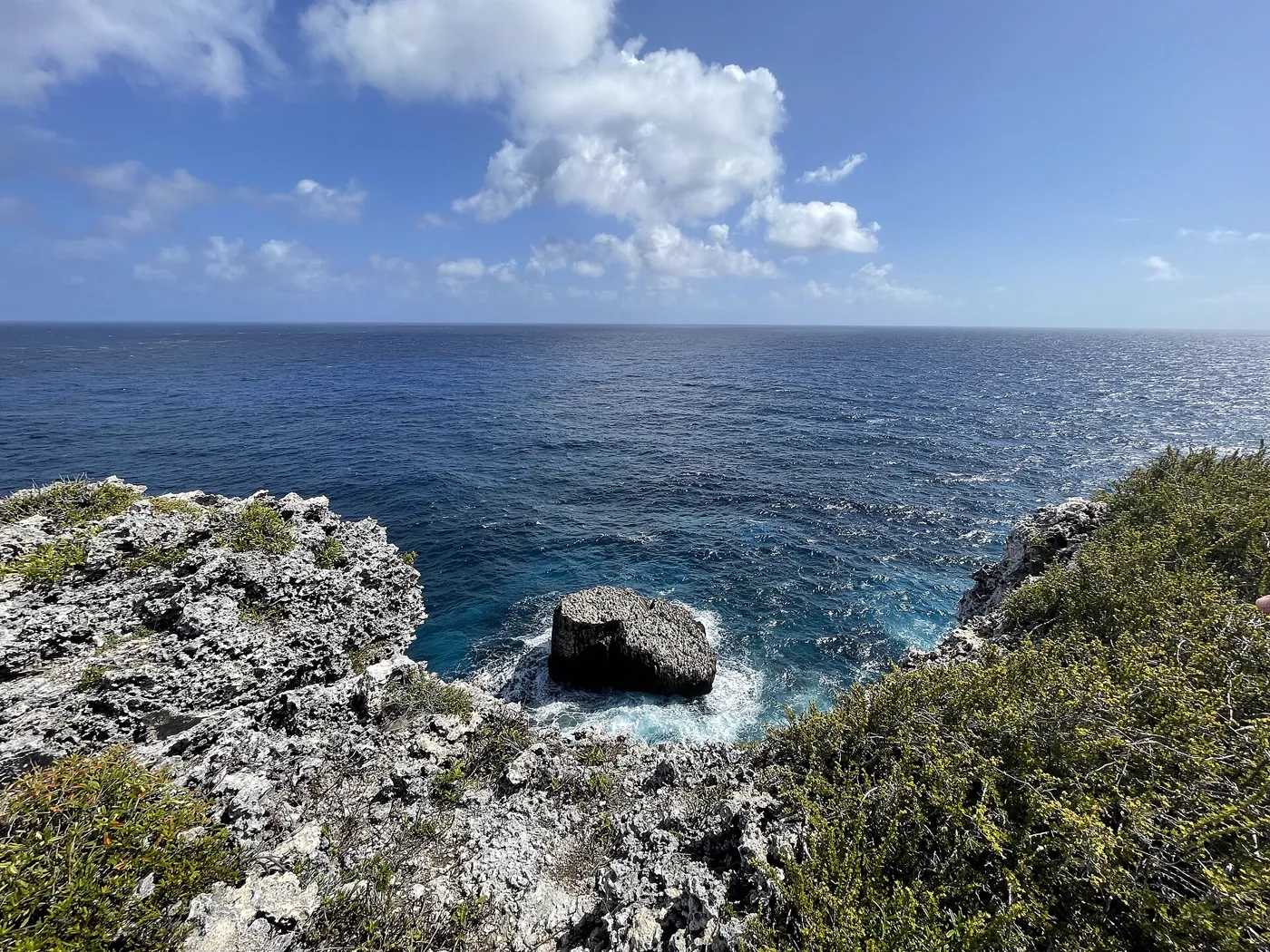
Every other island in this country lies low and soft. The Brac stands up. A spine of limestone rises from sea level at the west end and climbs the length of the island until it ends, twelve miles later, in a sheer 140 foot cliff dropping straight into open ocean. Brac is Gaelic for bluff, the name left by the Scottish fishermen who settled here, and the rock is still the whole personality of the place: it shades the light, funnels the frigate birds, hides the caves and gives every road two levels. Around 2,000 people live here at a pace that makes Grand Cayman look frantic.
Cayman Airways flies from Grand Cayman several times daily, about 35 minutes gate to gate, often continuing to or from Little Cayman, which makes a two island Sister Islands run the natural itinerary. Book the hops when you book your international flights; the aircraft are small and high season fills them. On island, hire a car or a scooter: distances are short, traffic is a rumour, and the reward for wheels is the freedom to chase the light from one end of the bluff to the other.
The bluff is honeycombed with caves that generations of Brackers used as hurricane shelters, and exploring them costs nothing but a torch and sensible shoes. Peter's Cave, reached by ladder and steps in the cliff above Spot Bay, looks down over the village and the sea like a watchtower; islanders sheltered here through the catastrophic 1932 storm, and standing in its mouth you understand why. Rebecca's Cave, near the west end, holds the grave of a child lost in that same hurricane and remains a quietly moving place. The Great Cave at the east end earns its name with chambers full of stalactites, and the Bat Cave is exactly as advertised, its residents harmless and asleep above your torchlight. Go in the morning before the heat, and leave everything as the island keeps it.
The bluff top footpath to the lighthouse at the island's eastern point is the Brac's essential hour: a level walk through wind-sculpted scrub to the edge of a 140 foot wall of rock, with brown boobies nesting on the ledges below your feet and frigate birds hanging motionless on the updraft at eye level. Sunrise here, with the cliff face catching first light and the seabirds commuting, is the single best free experience in the Sister Islands. Bring water, keep a healthy margin from the edge, and give nesting birds their space.
The Brac's reputation below the waterline rests on one famous resident: the MV Captain Keith Tibbetts, a 330 foot Russian built Koni class frigate sunk as an artificial reef off the northwest shore in 1996, the only divable Russian warship in the western hemisphere. Her bow section lies photogenically on its side at recreational depths, guns still pointing into the blue, dressed in fifteen years of sponge and coral. Around her, the north and south walls of the island drop away with the same drama as the bluff above, and the sites stay uncrowded in a way Grand Cayman's marquee reefs cannot promise. Two dive operations serve the island; boats are small and briefings personal.
Improbably, Cayman Brac is the Caribbean's best rock climbing destination. The bluff's face and its seaside walls carry more than a hundred bolted sport routes, from friendly slabs to overhanging test pieces above the ocean spray. Climbers self manage here: bring a rack of quickdraws, a 70 metre rope and a partner, and treat the fixed gear with the scepticism salt air deserves. For non climbers, watching from the lighthouse path as someone works a line above the sea is spectacle enough.
Birders tick the endangered Brac parrot in the National Trust reserve, the Westerly Ponds host herons and stilts, and the beaches at the west end offer sand and sunsets without another towel in sight. Food is simple and local: a handful of restaurants, the resort kitchens and whatever the fishermen landed. That simplicity is the product; the Brac does not perform for visitors, it just continues, and lets you join in.
Day one: arrive before lunch, west end beaches, sunset from the bluff road. Day two: Peter's Cave and Spot Bay in the morning, the lighthouse footpath before the heat, an afternoon at Rebecca's Cave and the Great Cave, dinner wherever is nearest. Day three: dive the Tibbetts and a wall site, or climb, or simply repeat the parts that already feel like yours. Fly onward to Little Cayman for the full Sister Islands week, or home, recalibrated.
Cayman Airways flies from Grand Cayman in about 35 minutes, several times daily, often via or alongside Little Cayman hops. Book with your international flights in high season.
The 140 foot bluff and its caves, the Tibbetts wreck, the only divable Russian frigate in the western hemisphere, seabird colonies and the Caribbean\u2019s best sport climbing.
Yes. Peter\u2019s Cave, Rebecca\u2019s Cave, the Great Cave and the Bat Cave are open, free and unstaffed. Bring a torch, wear proper shoes and leave everything untouched.
Two to four nights covers the caves, the lighthouse walk and the signature diving at the island\u2019s own pace, ideally paired with Little Cayman.
Yes, on Cayman Brac: over a hundred bolted sport routes on the bluff and its sea cliffs. Climbing is self managed, so bring your own gear and an experienced partner.
Ready-made George Town shore plans with honest timings, everything walkable from the tender.