
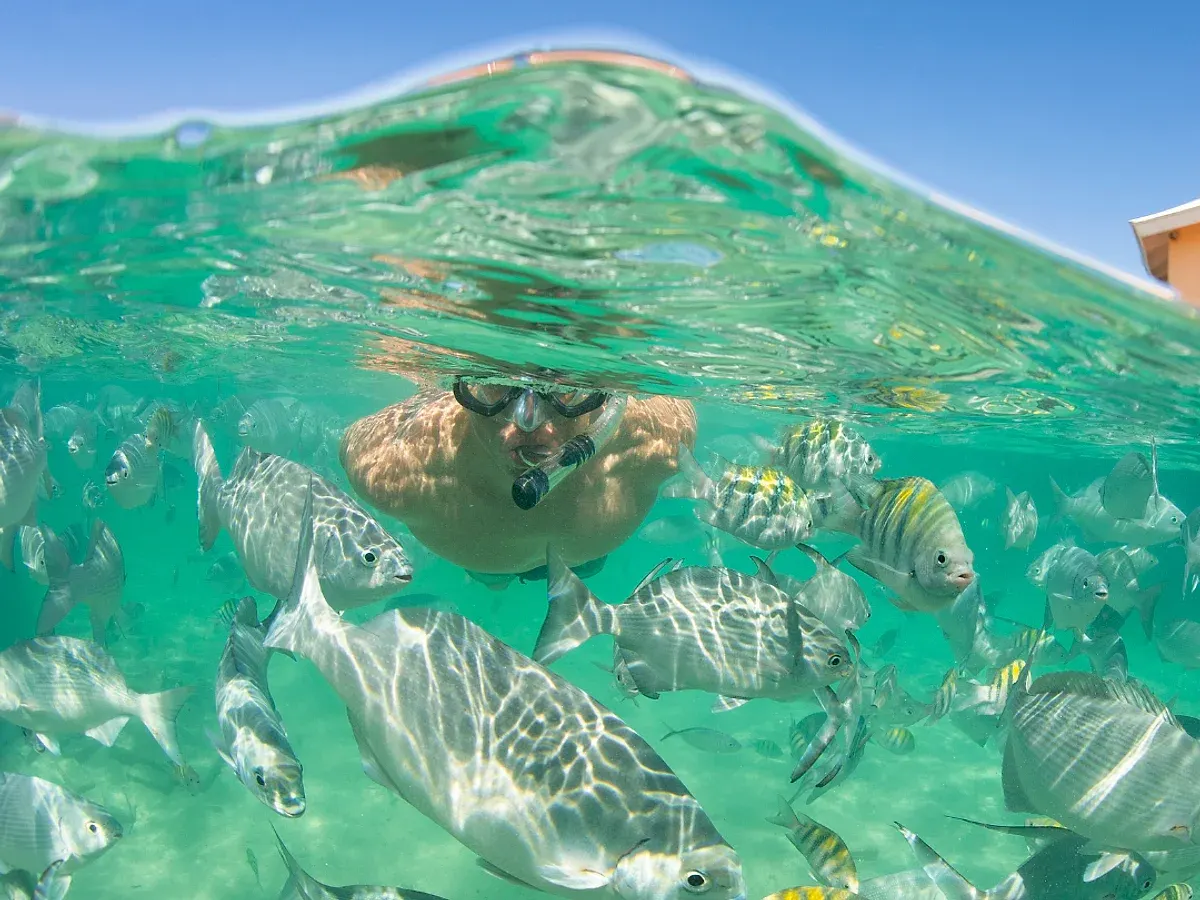
Water so clear it looks retouched, reefs a few fin kicks from the sand, and wild turtles on a schedule. This is the complete snorkel map of Grand Cayman.
Grand Cayman is the exposed tip of an underwater mountain, surrounded by deep ocean rather than shallow shelf. There are no rivers to carry sediment, little runoff, and the drop-offs pull clean blue water across the reefs twice a day. The result is visibility that regularly exceeds 100 feet and a shoreline where world class snorkelling starts, literally, at the public steps in the middle of the capital.
Two minutes on foot from the cruise landing, the twin sites of Eden Rock and Devils Grotto are the best free hour in the Cayman Islands. Enter down the steps at the dedicated snorkel park on the waterfront and you are over a maze of coral heads, tunnels and swim-throughs rising from about 40 feet of gin-clear water. Silversides shoal here in summer, tarpon the size of doors patrol the grottoes, and parrotfish graze the shallows. Go before 10 am on ship days for the calmest water and the site nearly to yourself. Confident swimmers can work the outer heads; beginners are happy over the inshore garden.
At the quiet north end of Seven Mile Beach, a small public beach beside the West Bay cemetery fronts the easiest proper reef snorkel on the island. Swim 50 to 80 yards out over calm sand and seagrass to a long band of coral heads busy with sergeant majors, blue tangs, squirrelfish and the occasional ray. The entry is soft sand, the water rarely exceeds 15 feet, and children who can swim manage it comfortably. Mornings are glassiest, and the casuarina trees behind the beach hold real shade for the shore crew.
On the south coast fifteen minutes east of George Town, Spotts is where wild green turtles graze the seagrass meadows most mornings. Slip in from the beach, float quietly over the grass, and let them surface around you: no tour, no fee, no guarantee, though calm early mornings run a very high hit rate. The small barrier reef keeps the inside gentle, and in winter, when Nor'westers stir the west coast, Spotts is often the calmest water on the island. Keep a respectful distance, keep your fins off the grass, and never touch or chase; the privilege depends on it.
Smith Cove, five minutes south of town, wraps a sandy pocket in ironshore arms that shelter fish the way harbour walls do: snorkel the rocks on either side for squirrelfish, juvenile angels and passing squid patrols. Water shoes earn their keep on the entries. Further along the south coast, the reef-protected shallows off Bodden Town reward anyone willing to explore away from every crowd on the island.
Rum Point's roped swim area sits over seagrass and patch coral in water that stays waist-to-chest deep for a hundred yards, which makes it the island's favourite family float. Ten minutes away, Starfish Point delivers exactly what it promises: red cushion starfish in knee deep water on a calm sandbar shoreline. Look, photograph, and leave them underwater; lifting them above the surface harms them and the island takes it seriously.
Three classics justify leaving the shore. The Stingray City sandbar pairs waist deep water with wild southern stingrays and usually includes a stop at Coral Gardens, a shallow reef alive with fish that have never learned to fear snorkellers, or at the barrier reef itself. The USS Kittiwake, the 251 foot wreck off Seven Mile Beach, reaches close enough to the surface that snorkellers can read her story from above on a calm day. And the East End reef line, snorkelled from the quiet resorts out there, is the island as it looked before anyone arrived: vast, healthy and nearly empty.
The west coast is calmest most of the year, which is why Seven Mile Beach snorkelling suits beginners. Winter cold fronts occasionally reverse the logic for a day or two, sending snorkellers to Spotts and the south. Summer brings the warmest water and the silverside spectacle in the grottoes. Year round, three rules keep the reef and you intact: reef safe sunscreen only, no touching or standing on coral ever, and a dive flag or bright float if you swim beyond the roped areas. Marine park rules protect nearly the whole coastline, which is exactly why it still looks the way it does.
Build the progression: Rum Point's roped shallows first, then Cemetery Reef when confidence arrives, then Stingray City by boat, where the sandbar means everyone can stand. Rash vests beat sunscreen for small backs, and a calm morning beats every other variable on the list.
Eden Rock and Devils Grotto in George Town for drama, Cemetery Reef for easy coral, Spotts Beach for wild turtles, and Coral Gardens or the Kittiwake by boat. All shore spots are free.
Yes, most reliably at Spotts Beach on the south coast, where green turtles graze the seagrass most mornings. Keep your distance and never touch or chase them.
Among the best in the Caribbean: calm, clear, warm water, sandy entries at Cemetery Reef and Rum Point, and roped swim areas. Confident beginners manage Eden Rock on calm mornings.
No. Seven world class spots are shore entries. Boats add the Stingray City sandbar, Coral Gardens and the Kittiwake wreck, all worth doing once.
Reef safe sunscreen only, no touching or standing on coral, no taking anything from the sea, and a flag or float outside roped areas. Marine parks protect most of the coastline.
Ready-made George Town shore plans with honest timings, everything walkable from the tender.