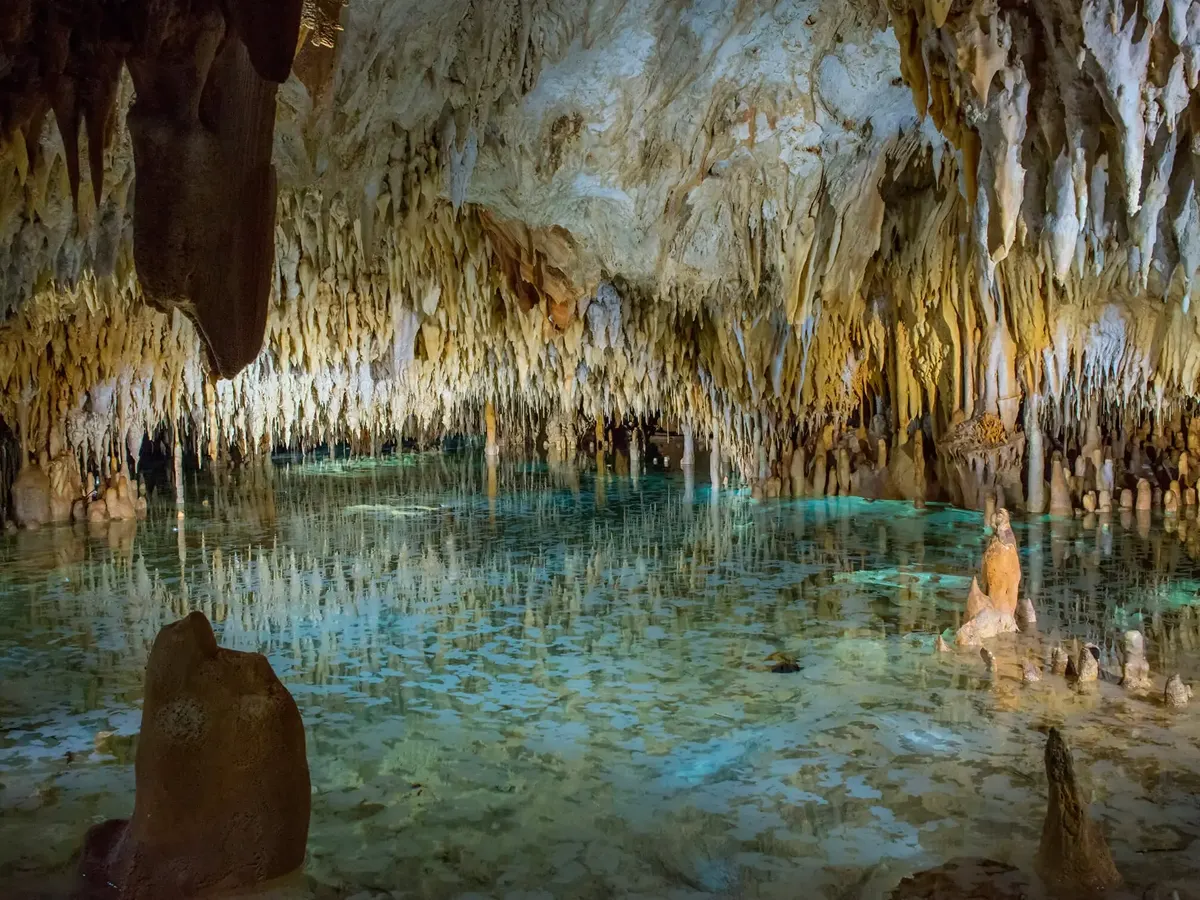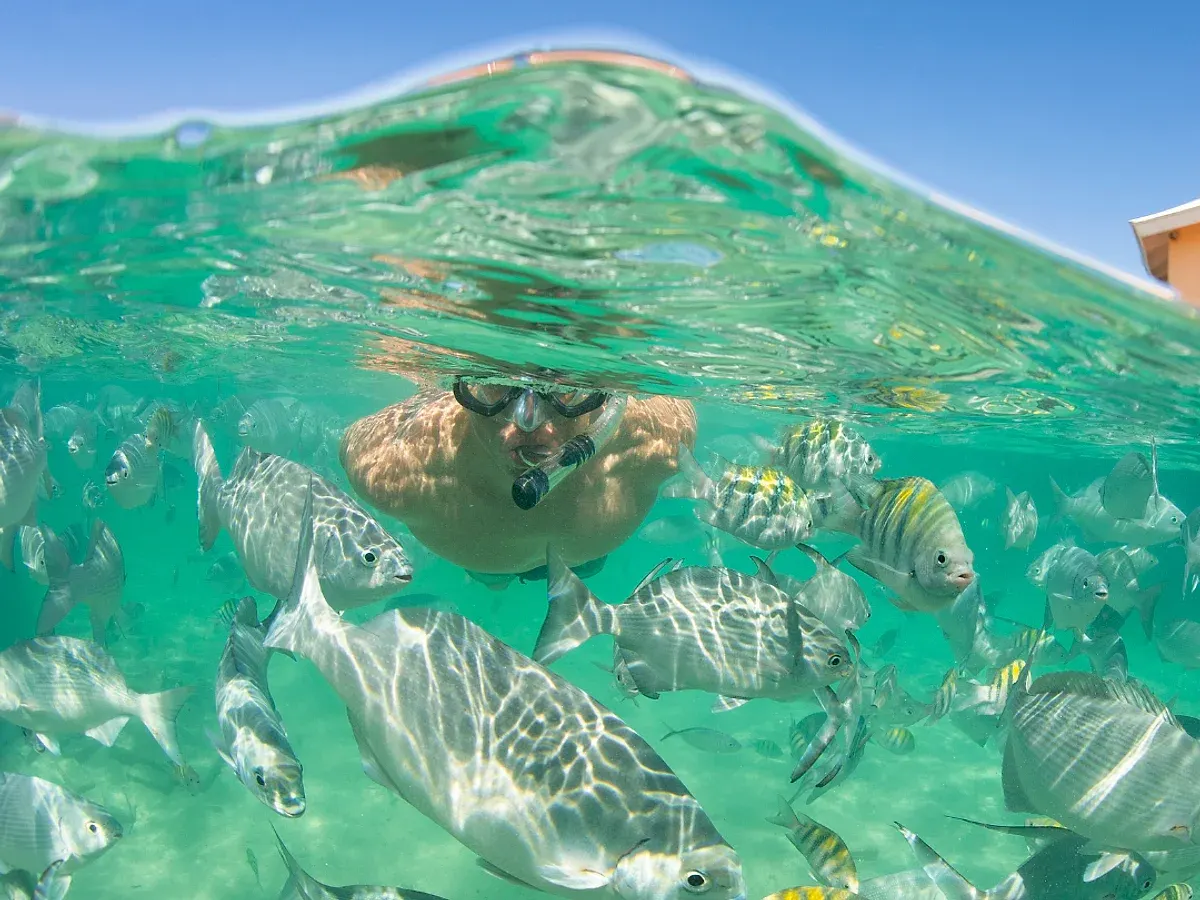
Little Cayman is the smallest and least developed of the three Cayman Islands, a flat, ten-mile sliver of coral, scrub and lagoon lying between Grand Cayman and Cayman Brac. Only a small number of people call it home, cars are outnumbered by bicycles and iguanas, and the whole island runs at a pace that feels closer to a nature reserve than a resort. People come here for three things above all: the diving, the wildlife, and the rare pleasure of being genuinely disconnected.
The quietest of the three islands
Where Grand Cayman has its resorts and George Town has its cruise ships, Little Cayman has almost nothing in the way of crowds. The resident population is tiny, the roads are mostly unpaved, and there is a real chance the busiest moment of your day will be waiting for a rock iguana to finish crossing the lane. The single airstrip doubles as a landmark, a road famously gives way to aircraft, and evenings are dark and star-filled. This is an island for people who want less, not more.
Bloody Bay Wall - one of the world's great dives
The reason many divers make the journey is Bloody Bay Marine Park and the Bloody Bay Wall, a sheer underwater drop-off that begins in shallow water and plunges thousands of feet into the blue. It is regularly named among the finest wall dives on the planet: coral starts just beneath the surface, then the reef simply falls away, its face crowded with sponges, sea fans and swim-throughs. Visibility is often exceptional, and the protected marine park keeps the reef healthy and the fish life abundant.
Because the wall's top is so shallow, snorkellers and less experienced divers can enjoy the edge of it too, while deeper divers descend along the face. Diving here is done through the island's dive operations, which handle boats, guiding and gear; if a wall dive is your goal, plan your trip around it and book ahead, as capacity on such a small island is limited.
Booby Pond and the island's wildlife
On land, the headline is the Booby Pond Nature Reserve, a protected wetland that shelters one of the largest red-footed booby colonies in the Caribbean, along with a resident population of magnificent frigatebirds that harry the boobies for their catch. A small visitor centre and viewing platform let you watch the colony without disturbing it, and binoculars are well worth bringing. Beyond the pond, wild rock iguanas are a common sight across the island, sunning themselves on the roads and verges, and the surrounding waters and lagoons draw turtles, tarpon and a wealth of birdlife.
Beaches, lagoons and slow days
Little Cayman's shoreline is quiet and often empty. Point of Sand, at the island's eastern tip, is a spit of pale sand with clear, shallow water and views across to Cayman Brac - a classic spot to swim, snorkel and do very little. Owen Island, a tiny uninhabited islet just off the south coast, can be reached by kayak or a short paddle for a castaway afternoon. None of it is developed or ticketed; the appeal is space, silence and the sense of having the water almost to yourself.
Getting there
Little Cayman is reached by a short domestic flight from Grand Cayman, operated by Cayman Airways on small aircraft, sometimes routing via Cayman Brac. Schedules are limited and aircraft are small, so book early and check current timetables and baggage limits before you travel. Once on the island, getting around is done by bicycle, on foot, or with the vehicles arranged through your accommodation or dive operation - there is no need, and little room, for anything more.
Good to know before you go
Come prepared for simplicity: bring anything essential with you, from specific medications to reef-safe sunscreen and insect repellent, as shops are few and stock is limited. Accommodation is a small number of dive lodges and guesthouses rather than large hotels, so reserve well ahead, especially in the winter dive season. Respect the marine park and nature reserve rules, give the iguanas and nesting birds a wide berth, and check current times, prices and schedules before you visit - on an island this small, it always pays to confirm ahead.