The Queen Elizabeth II Botanic Park is Grand Cayman's great green retreat, a broad sweep of managed gardens and wild woodland set in the quiet interior of the North Side, near Frank Sound. Away from the beaches and the bustle, it is where the island slows down: a place for a morning walk among orchids and colour beds, for glimpsing rare birds around a still lake, and - if you are lucky - for meeting the electric-blue lizard found nowhere else on earth.
A garden with a purpose
The park is more than an ornamental garden. It is a working conservation site, a slice of protected woodland, and a showcase for the plants and habitats of the Cayman Islands, all laid out along a gentle looping trail. You can wander it in an hour or linger for half a day, and it rewards an unhurried pace - this is somewhere to notice the small things, from a flash of colour in the canopy to the click of an iguana moving through dry leaves.
The gardens
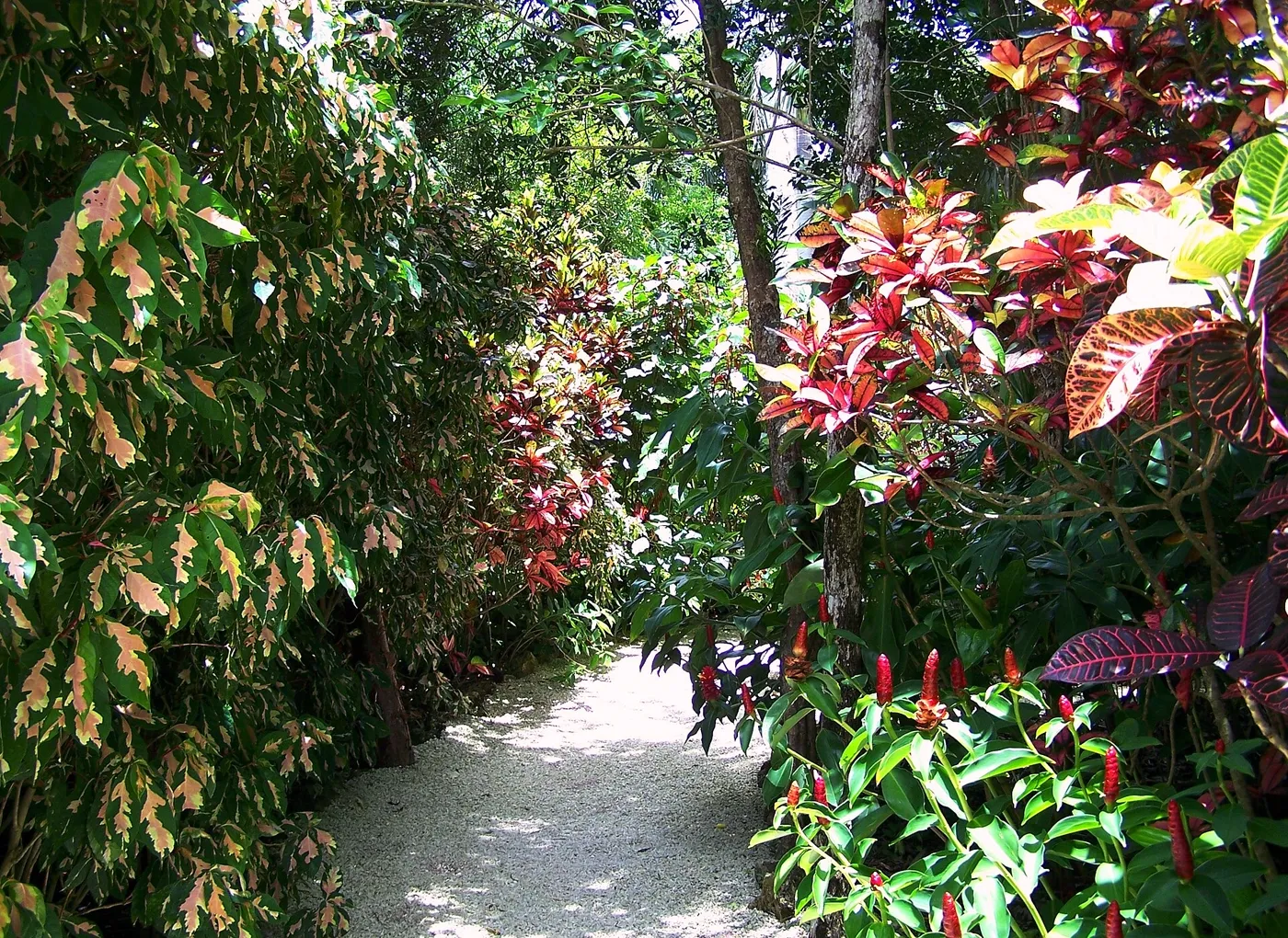
Several distinct gardens make up the heart of the park. The Floral Colour Garden is arranged as a walk through the spectrum, beds shifting from cool blues and purples through to hot reds and yellows, and it is at its most vivid in the wetter months. The Heritage Garden recreates a traditional Caymanian homestead and its surroundings, a reminder of how islanders once lived off this land, with a sand-yard cottage and the fruit trees and medicinal plants that went with it.
An orchid boardwalk threads through a shaded pocket of the park, raised above the ground so you can walk among native and cultivated orchids without disturbing them. Their flowering is seasonal, so what you see depends on the time of year, but the boardwalk is a cool, quiet highlight in any month.
The lake and the woodland
At the centre of the park lies a lake that draws in waterbirds, and the margins are a good place to pause with binoculars: herons, ducks, waders and migratory visitors all use it through the year. Beyond the cultivated beds, a woodland walking trail leads through native dry forest, giving a sense of what much of the island looked like before development - knotted trees, birdsong, and the occasional rustle of something moving through the undergrowth.
Home of the blue iguana
The park is best known as the home of the Grand Cayman blue iguana, one of the rarest lizards in the world and a true island endemic. Driven to the very edge of extinction, the species has been brought back through a dedicated recovery programme based here, which breeds young iguanas and releases them into the protected habitat around the park. Adults can be startlingly large and their skin takes on a vivid blue in the right light. You may well spot one basking on the trails, and the recovery programme is central to why the park matters far beyond its garden gates.
If you do meet one, keep your distance, do not feed it and give it room to move - these are wild, protected animals, and the whole point of the work done here is to let them live freely.
Walking the park
The main trail is mostly flat and easy, following made paths and boardwalks, but it is a natural site rather than a manicured one, so wear proper walking shoes and expect uneven ground in places. There is little shade on the open garden sections, the sun is strong, and it can be humid, so bring water and sun protection. Mornings are cooler and much the best time for wildlife, when the birds are active and the iguanas come out to bask.
Planning your visit
The park sits off Frank Sound Road in the North Side, roughly in the middle of the island, and is easiest to reach by hire car or taxi; it is a scenic drive from the George Town and Seven Mile Beach side. There is an admission fee that goes towards the upkeep of the gardens and the conservation work - check current admission before you visit, as rates and opening times can change. Allow at least an hour, or longer if you want to walk the woodland trail and take your time around the lake.