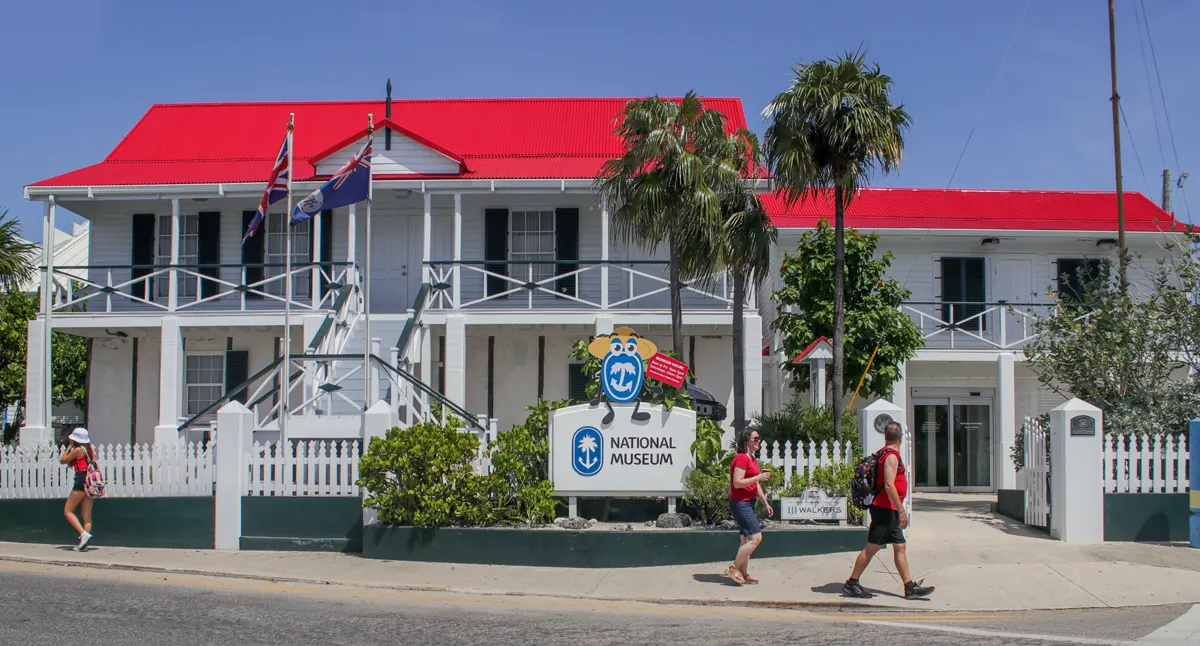
The Cayman Islands National Museum sits right on the George Town harbour front, inside the Old Courts Building - a squat, whitewashed structure that is one of the oldest surviving public buildings on Grand Cayman. Step through its doors and you trade the glare of the waterfront for a cool, quiet run through the islands' natural history and cultural heritage, from the reefs offshore to the seafaring families who built a life here.
A home as old as the story it tells
Before it was a museum, the Old Courts Building did the practical work of a small colony. Over its long life it served in turn as a courthouse, a jail, a post office and a meeting hall - the kind of single building that a young community leans on for everything at once. That history is part of the appeal: the walls themselves are an exhibit, and the restored structure gives the collection a sense of place that a modern gallery could never manufacture.
Because it faces the harbour, the museum is also one of the easiest cultural stops to reach in George Town. It stands a short, flat walk from the point where cruise tenders come ashore, which makes it a natural first or last stop on a day in town - somewhere to understand the islands before you head off to the beaches and the reefs.
What you will see inside
The collection is arranged to move from the land and sea outward to the people. Natural-history displays introduce the geology of these low coral islands and the creatures that live on and around them, setting up the reefs, mangroves and marine life that visitors come to see for themselves. From there the story turns to the Caymanians: how they made their living from the sea, the boats they built, and the daily rhythms of island life before roads, resorts and finance.
Seafaring runs through the whole museum. Cayman men were prized crew on ships around the world, and the maritime rooms trace that legacy through models, tools, photographs and everyday objects. Alongside them, exhibits on turning - the skilled craft of shaping wood and other materials by hand - and on domestic life show how families fed, clothed and equipped themselves on islands where almost everything had to be made, mended or brought in by boat.
How long to spend
The museum is compact and easy to take in without a plan. Most visitors spend somewhere between an hour and two, which is enough to walk the galleries, watch any short film on offer and browse the gift area without rushing. History enthusiasts can happily linger longer; families with restless children can move through the highlights more quickly.
It also makes an excellent rainy-day option. When a passing shower closes in on a beach afternoon, the museum is an air-conditioned, undercover way to keep the day going - and a genuinely useful one, since what you learn here colours everything you go on to see across the islands.
Getting there and practicalities
You will find the museum on the George Town waterfront, in the heart of the capital and within an easy walk of the shops, the cruise landing and the harbour-front restaurants. If you are driving, park in central George Town and stroll over; if you are arriving by cruise, it is one of the closest attractions to the tender dock. There is an admission fee - check the current rate before you visit - and opening hours can vary with the season and the cruise calendar, so it is worth confirming current times ahead of your trip.